







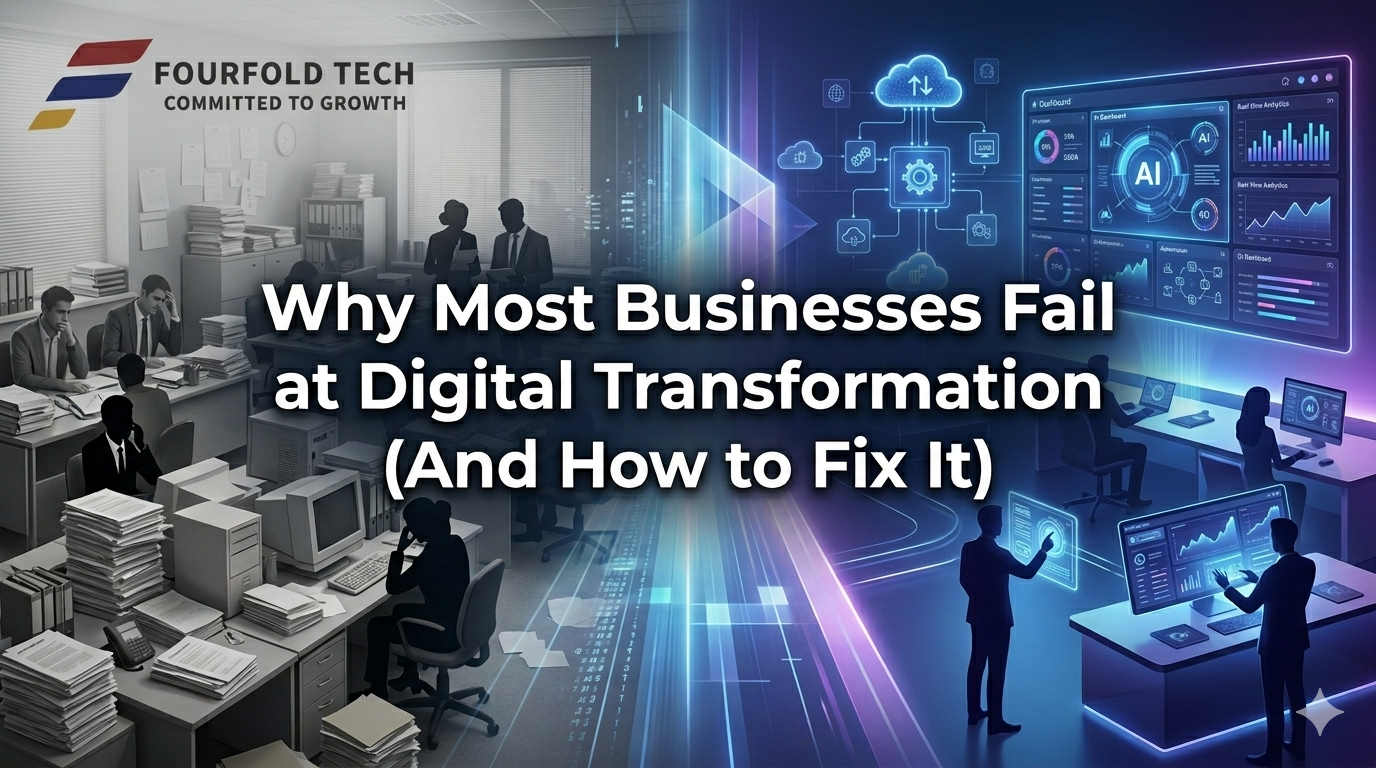
Introduction
In 2026, digital transformation is no longer optional it’s about survival.
Despite heavy investments in websites, marketing tools, CRM systems, and automation, most businesses still struggle to see real results:
- They generate traffic but not leads
- They adopt tools but lack clarity
- They invest, but don’t grow
So what’s going wrong?
Let’s break it down
The Real Problem: Fragmented Digital Systems
One of the biggest reasons businesses fail is lack of integration.
Most companies operate like this:
- Website built by one agency
- Marketing handled by another
- CRM managed separately
- Sales team working in isolation
The Result?
- Disconnected systems
- Inconsistent data
- No clear visibility into what drives revenue
This leads to:
- Poor lead quality
- Broken customer journeys
- Inefficient decision-making
- Wasted marketing budgets
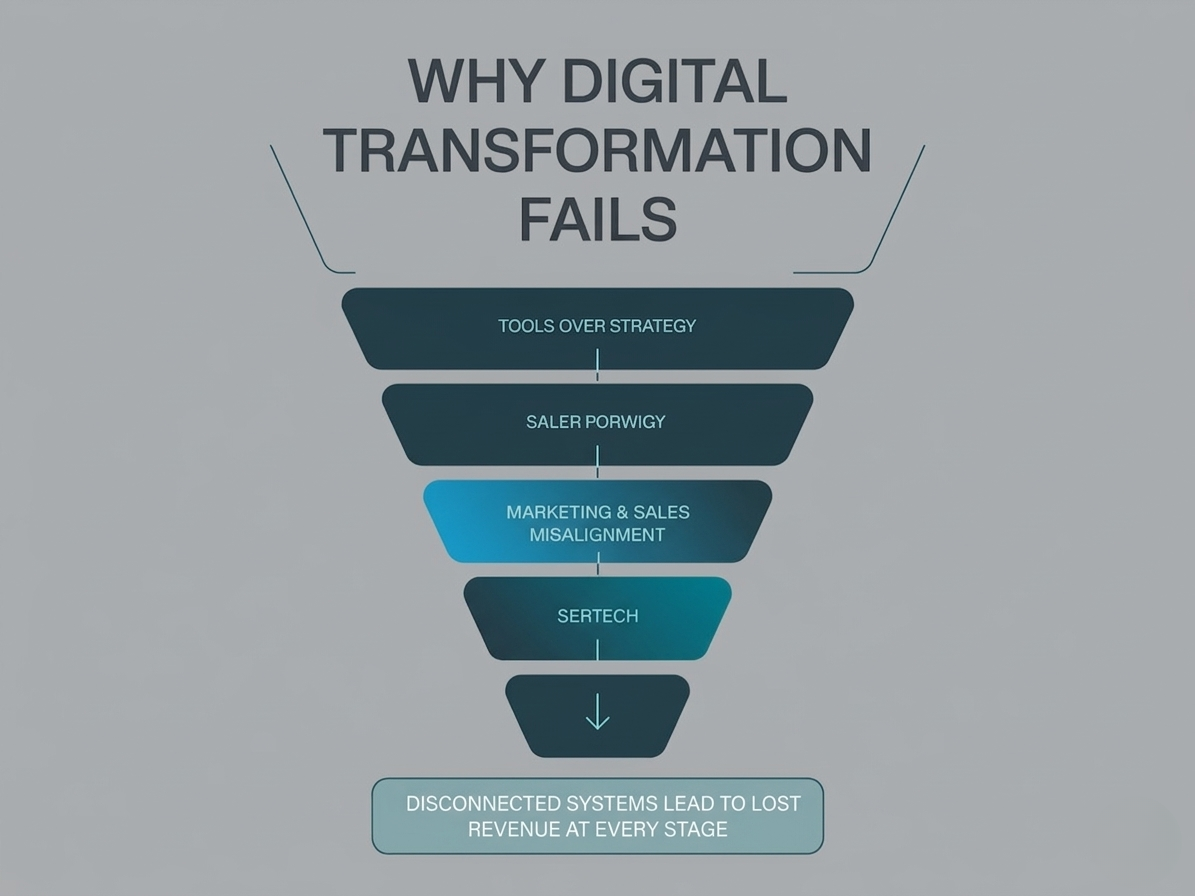
5 Key Reasons Why Digital Transformation Fails
- Focusing on Tools Instead of Strategy Many businesses jump straight into:
CRM, ads, automation tools without a plan.Reality: Tools don’t create growth strategy does Without a clear strategy:- Campaigns lack direction
- Teams work in silos
- ROI becomes unpredictable
- Lack of Alignment Between Marketing & Sales Marketing brings leads
Sales closes deals But when they’re not aligned:- Leads get lost
- Follow-ups are inconsistent
- Conversion rates drop
A strong system connects the full journey:
First click → Final conversion
- No Data-Driven Decision Making Businesses collect data… but don’t use it.
Without proper analytics:- You don’t know what’s working
- You can’t optimize campaigns
- Growth becomes guesswork
Modern businesses rely on real-time insights
- Ignoring Customer Experience Your digital presence must feel smooth and connected
But many businesses have:- Slow websites
- Confusing user journeys
- Poor mobile experience
Result:
High bounce rates + lost revenue
- Short-Term Thinking Digital transformation is not a one-time project
Common mistakes:- Expecting instant results
- Stopping after launch
- Ignoring long-term optimization
Growth requires continuous improvement
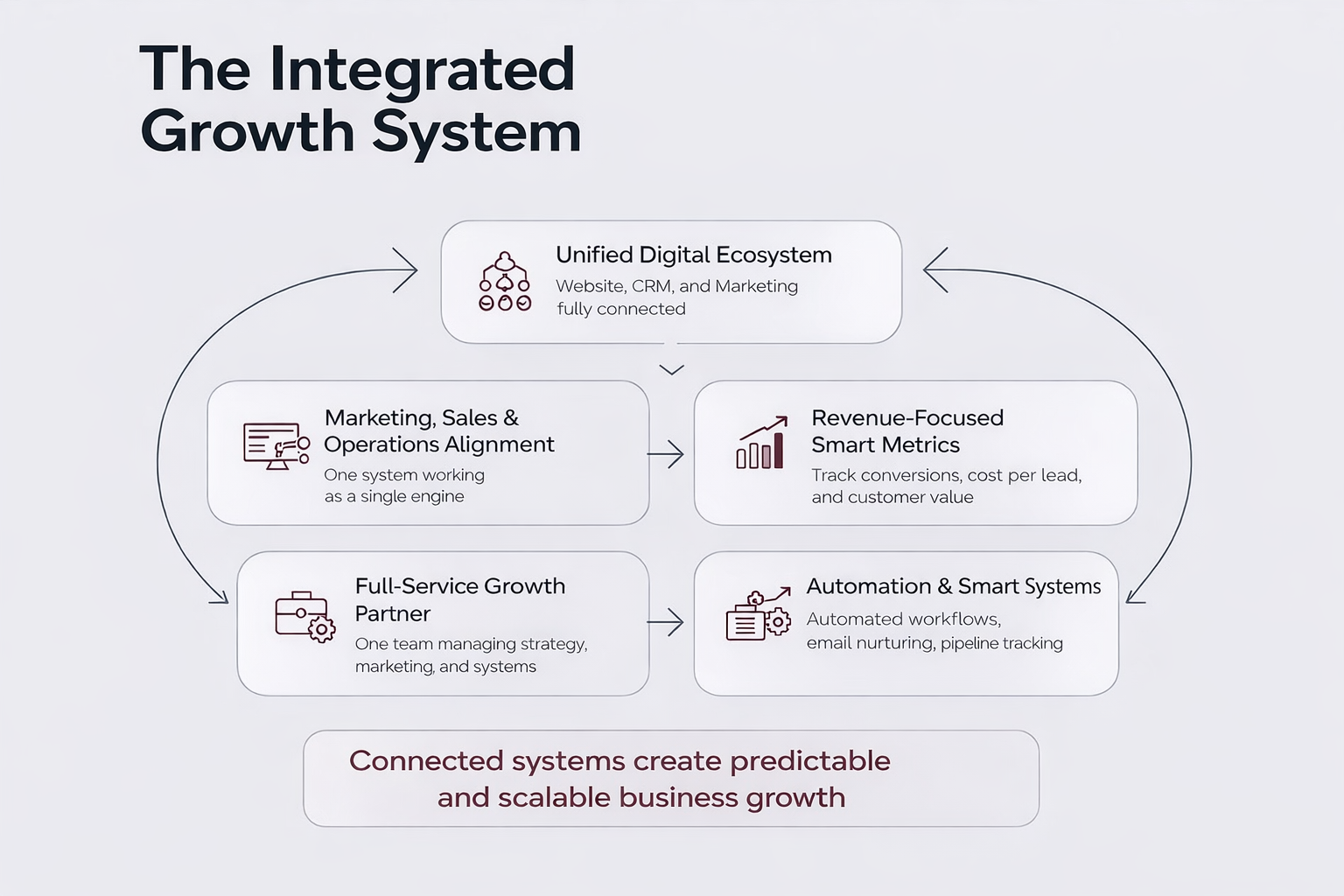
How to Fix It: The Integrated Growth System Approach
- Build a Unified Digital Eco system Instead of disconnected tools, create a connected system:
- Website → feeds leads into CRM
- Marketing → tracks user behavior
- Sales → gets real-time insights
One system = one source of truth
- Align Marketing, Sales & Operations Your business should work like a single engine:
- Marketing → attracts
- CRM → nurtures
- Sales → converts
- Operations → delivers
Alignment = predictable & scalable growth
- Focus on Revenue, Not Vanity Metrics
Stop chasing:
1. Likes
2. Impressions
3. ClicksStart tracking:
1. Cost per lead
2. Conversion rate
3. Customer lifetime value
This is how growth-driven companies operate
4. Invest in Automation & Smart Systems
Automation improves efficiency + performance
-
- Lead nurturing workflows
- Email automation
- Sales pipeline tracking
Your team focuses on closing deals, not chasing data
- Partner with a Full-Service Growth Team Working with multiple vendors leads to:
1. Confusion
2. Miscommunication
3. Blame-shifting Better approach: One integrated partner A strong partner will:- Build your website
- Manage marketing
- Integrate CRM & ERP
- Optimize your entire funnel
Result: Accountability + measurable growth
The Future of Digital Transformation
The future isn’t about doing more
It’s about being smarter and connected
Successful businesses in 2026 will:
- Use integrated systems
- Make data-driven decisions
- Focus on long-term scalability
- Treat digital as a continuous journey
Final Thoughts
Digital transformation doesn’t fail because of lack of effort. It fails due to lack of structure
If your business is struggling with:
- Inconsistent leads
- Disconnected systems
- Unclear ROI
Then it’s time to rethink your approach


