








So, you want to grow your business, someone recommended SEO, and now you’re wondering what it actually means or how it helps? Stay relaxed as we have got you covered.
Professional SEO Services help businesses improve their visibility on search engines, reach the right audience, and turn relevant searches into valuable website traffic and leads. This guide breaks SEO down into simple, practical terms and shows why SEO for business growth matters when you want to attract the right people through a Google search.
Many businesses publish blogs, add new pages, and target keywords but still struggle to appear in search results or turn website visits into leads.
The issue stands at more than just content. Poor website architecture, slow performance, indexing problems, and irrelevant content misaligned with what people are searching for.
The answer to your problems is to combine technical SEO and content together.
A technically strong website gives search engines a clear path to search and review your pages, while useful content helps you reach the right audience and move them towards action. When needed, professional SEO Services provide the expertise to bring these elements together and build a stronger foundation for long-term business growth.
What Is SEO and Why Does It Matter for Business Growth?
Search Engine Optimisation (SEO) is the process of improving a website and its content so that search engines like Google can review, index, and rank its pages for relevant searches. Its role in organic search is to help your website appear naturally in search results without paying for every click.
When your pages match what people are searching for and provide a useful experience, SEO helps bring more relevant visitors to your website.
This is where SEO differs from SEM (Search Engine Marketing). Both focus on increasing visibility in search engines, but they use different methods. SEO focuses on earning organic rankings over time, while paid search uses advertising to place your website in sponsored search results.
| SEO | SEM |
| Focuses on organic search visibility. | Focuses on paid search visibility. |
| Does not charge for each organic click. | Businesses pay for clicks or impressions, based on the campaign. |
| Rankings are influenced by content, relevance, website quality, and other SEO factors. | Ad placement is influenced by bids, ad quality, relevance, and campaign settings. |
| Takes time to build consistent results. | Delivers visibility as soon as campaigns are launched. |
| Supports long-term organic traffic growth. | Provides immediate traffic while the campaign is active. |
| Content and website improvements continue to provide value over time. | Results depend on continued advertising spend. |
How does SEO impact business growth?
- Organic visibility: Helps your website appear in search results when potential leads search for relevant products, services, or information.
- Qualified traffic: Brings relevant visitors and supports growth through SEO services for business growth.
- Leads and conversions: Connects high-intent searchers with relevant landing pages, content, and calls to action that motivate them to take the next step.
- Brand awareness: Keeps your business visible across relevant searches, allowing more people to recognise and remember your brand.
- Long-term customer acquisition: Builds a steady source of organic traffic that continues to support customer acquisition without paying for each individual visit.
Mechanics of Search Engines
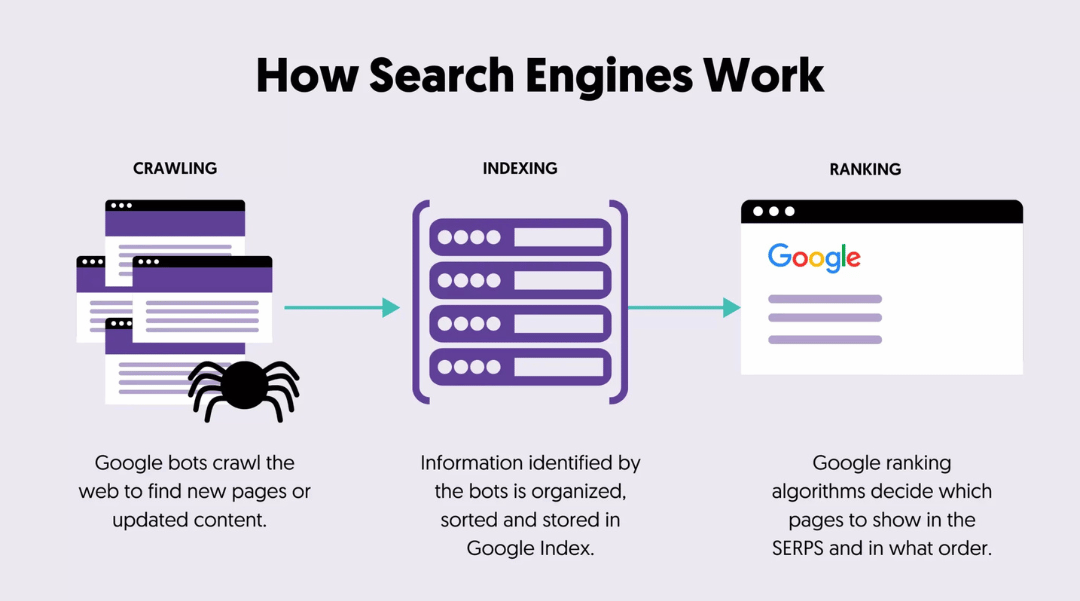
Search engines like Google follow a process to search, understand, and organise web pages before showing them in search results. This process has three key stages: crawling, indexing, and ranking.
- Crawling
Crawling is how search engines identify web pages. Search engine bots, often called crawlers or spiders, follow links across websites to find new pages and revisit existing ones to check for updates and relevance.
- Indexing
Once a page is discovered, search engines analyse its content, structure, images, and other elements to understand what it is about. The page is then stored in a large search index, where it becomes qualified to appear for relevant searches.
- Ranking
When someone enters a search query, search engines analyse the pages in their index to determine which ones best match the search. They consider factors like relevance, content quality, website accessibility for business, and authority to decide which pages appear higher in the results.
What do search engines look for in a page?
- Relevance: The page should closely match what the user is searching for.
- Helpful content: Content should provide clear, useful information that targets the user’s needs.
- Technical accessibility: Search engines should crawl, render, and understand the page without technical barriers.
- Page experience: Quick loading, mobile usability, easy navigation, and a smooth experience improve how users interact with the page.
- Authority and trust: Reliable information, quality backlinks, and strong website relevance help establish trust with search engines and users.
Types of SEO
SEO covers multiple areas, with each one helping search engines understand, access, and trust your website:
- On-Page SEO: Refines content and page elements like headings, title tags, URLs, keywords, and internal links.
- Technical SEO: Improves the website’s crawlability, indexing, speed, mobile usage, and technical performance.
- Off-Page SEO: Builds your website’s authority from backlinks, brand mentions, and other signals from external websites.
- Local SEO: Helps businesses appear in location-based searches and gain customers from specific areas.
Elements That Make Up Technical SEO
Writing great content is only beneficial when search engines can find, analyse, and understand it. Technical SEO creates this foundation by improving the technical elements of a website so its pages are easier to crawl, index, and rank.
Website structure and internal linking
A clear website structure helps both users and search engines navigate your site without confusion.
- Logical site architecture: Organise pages into clear categories and sections to create a strong website architecture for SEO.
- Internal links: Connect related pages to help search engines identify and understand them.
- Clean URL structure: Use short and descriptive URLs that clearly point to what each page covers.
- Easy access: Keep key pages within a few clicks of the homepage.
A well-structured website also starts with the right development foundation. Website builders like WordPress, Shopify, Drupal, and others are the best choices in building your business website.
To build one, it is important to know how to pick a WordPress development company when building or redesigning a WordPress site.
Indexing and crawlability
Search engines need access to the right pages and clear signals about which pages belong in search results.
- XML sitemap: Helps search engines identify important pages across your website.
- Robots.txt: Controls which parts of your site crawlers are allowed to access.
- Canonical tags: Tell search engines which version of similar or duplicate pages to focus on.
- Duplicate content: Reduce repetition that creates confusion about which page to rank.
- Indexation issues: Identify pages that are blocked, excluded, or incorrectly indexed.
Site speed and Core Web Vitals
A slow website frustrates users and creates a poor page experience. Technical SEO focuses on improving loading performance across devices.
- Page loading: Reduce delays so important content appears quickly.
- Mobile performance: Make sure pages load efficiently on smartphones and tablets.
- Core Web Vitals: Analyse key metrics related to loading, responsiveness, and visual stability.
- User experience: Make pages faster and simpler to interact with.
A Core Web Vitals checklist will help you understand the technical side in further detail.
Mobile-friendly and secure websites
Your website needs to work reliably across devices while protecting user data.
- Mobile usability: Make content, buttons, and navigation easy to use on smaller screens.
- HTTPS: Secure data transferred between your website and its visitors.
- Responsive design: Allow page layouts to adapt smoothly to different screen sizes.
Structured data and search visibility
Structured data gives search engines additional context about the information on a page. By using relevant schema markup, businesses help search engines understand elements like products, services, articles, reviews, and events. They in turn, support improved search result features where eligible.
How to Build an SEO Content Strategy For Your Audience Searches?
Building a technically strong website is just the first half of growing your SEO website. The right content that brings the relevant audience comes next. An SEO content strategy helps you decide what to publish, which keywords to target, and how each content piece supports your broader business goals.
Keyword research and search intent
Start by understanding what your audience searches for and why they search for it.
- Find relevant keywords: Look for search terms related to your products, services, and audience’s problems.
- Understand search intent: Separate keywords based on informational, commercial, and transactional intent.
- Focus on business relevance: Look beyond search volume and focus on keywords that bring in the right audience and support your goals.
Topic clusters and content hubs
Instead of publishing irrelevant articles, organise content around wider topics to build stronger topical relevance.
- Pillar pages: Cover a broad topic in depth and act as the main content hub.
- Cluster pages: Address specific questions or subtopics related to the pillar.
- Internal linking: Link related pages together to create connections for users and search engines.
- Build topical authority: Cover a subject in detail instead of relying on a few separate articles.
Map content to the customer journey
Different users need different types of content based on where they are in their buying journey.
- Awareness: Use educational content to answer questions and provide solutions.
- Consideration: Use comparisons, guides, and solution-based content to help users assess their options.
- Decision: Use service pages, product content, case studies, and strong CTAs for further action.
Pick topics that support business goals
Your focus should not be on each high-volume keyword. Prioritise topics based on what you want from SEO.
- Traffic-generating topics: Target wider searches that attract relevant visitors.
- Lead-generating topics: Focus on problems and searches with stronger commercial intent.
- Product/service-focused topics: Build content that connects directly with what your business sells.
Authoritativeness and Trustworthiness
Building trust and authority are two of the most crucial elements of SEO-based content. Google ranks your content based on how high your website scores on these factors of the EEAT (Experience, Expertise, Authoritativeness, Trustworthiness) principle.
A strong website and useful content form the foundation of SEO, but search engines also look for signs showing your website is trustworthy and relevant.
Building authority includes earning recognition from credible sources and constantly providing useful information to your audience.
Earn backlinks
Backlinks from other websites help establish your website’s relevance and authority. You need to build your own
- Quality over quantity: Focus on earning links from credible websites rather than collecting a large number of low-quality links.
- Relevance and authority: Look for links from sources that are relevant to your industry and already trusted by their audience.
- Editorially earned links: Create useful content that other websites genuinely want to reference and link to.
Strengthen brand authority
Your brand becomes more reliable when people consistently find useful and credible information associated with it.
- Helpful resources: Publish guides, research, and other resources that answer real audience questions.
- Expert-led content: Use first-hand experience and subject expertise to make your content more credible.
- Digital PR and mentions: Earn coverage and brand mentions through useful insights, original data, and industry contributions.
Support local visibility
Businesses serving specific locations need to build signals that establish their local relevance.
- Google Business Profile: Keep your profile accurate and updated with essential business information.
- Local relevance: Create location-focused content that reflects the services and areas you actually serve.
- Reviews and citations: Maintain consistent business information across directories and seek out customer reviews.
Measure SEO Performance and Business Growth
SEO must be measured beyond rankings. Tracking the right metrics shows whether your efforts are bringing in the right audience, generating leads, and increasing business growth.
SEO metrics that matter
- Organic traffic: Shows how many visitors reach your website through unpaid search results.
- Keyword visibility: Tracks how strongly your pages appear for target search terms.
- Engagement: Shows how visitors interact with your content and if it keeps them interested.
- Leads: Measures enquiries, form submissions, calls, or other actions that hint to potential customers.
- Conversion rate: Shows how effectively organic visitors turn into leads or customers.
- Revenue: Connects SEO performance with the revenue generated from organic traffic.
Tools for tracking SEO performance
Use the right tools to monitor both search performance and what visitors do after reaching your website.
- Google Search Console: Tracks search queries, clicks, impressions, indexing, and keyword performance.
- Google Analytics: Shows website traffic, engagement, conversions, and user behaviour.
- SEO platforms and crawling tools: Help monitor rankings, backlinks, site health, and technical SEO issues.
Use data to improve your SEO Strategy
SEO data becomes valuable when you use it to decide what to improve next.
- Identify content gaps: Find topics and queries your existing content does not fully cover.
- Find declining pages: Investigate pages losing rankings, traffic, or conversions.
- Fix technical issues: Address crawlability, indexing, speed, and other problems affecting performance.
- Focus on high-performing topics: Expand content around topics that consistently attract traffic, leads, or conversions.
Common SEO Mistakes That Limit Business Growth
Falling for the most obvious loopholes in SEO is more common than you think. A few common SEO mistakes hold back an otherwise strong strategy. Avoiding them keeps your efforts focused on visibility, relevance, and measurable business results.
- Publishing without search intent: Content that does not match what users are looking for struggles to attract relevant traffic.
- Ignoring technical SEO: Crawlability, indexing, speed, and mobile issues prevent search engines from properly accessing and understanding your pages.
- Targeting irrelevant keywords: High search volume means little when the keyword does not attract your target audience or support a business goal.
- Creating pages with mixed intent: Multiple pages targeting the same search intent create superfluous competition and weaken your content structure.
- Focusing only on rankings: High rankings are not enough when visitors do not become leads or customers.
- Ignoring existing content: Outdated or underperforming pages need regular reviews, updates, and optimisation.
Turn SEO Into Sustainable Business Growth
SEO is the best choice when different elements of your website and content strategy work together. Technical SEO creates the foundation, useful content gathers search demand, and ongoing optimisation turns visibility into measurable business growth. Focusing only on rankings or publishing content without a strong technical base leaves important opportunities on the table.
A well-planned SEO strategy also gives your business a clear path from search visibility to traffic, leads, and conversions. Fourfold Tech brings these elements together through SEO strategies designed to improve website performance, content visibility, and long-term growth.
Frequently Asked Questions (FAQs)
1. How long does SEO take to generate results for a business?
SEO results build over time instead of appearing immediately. The timeline depends on factors like website authority, competition, technical condition, content quality, and the keywords being targeted.
2. How do I know which keywords are worth targeting?
Focus on keywords based on search intent, business relevance, competition, and conversion potential instead of search volume alone. A lower-volume keyword that attracts your ideal customer is more valuable than a high-volume term with little relevance to your business.
3. How often should I update existing SEO content?
Review important pages regularly and update them when information becomes outdated, rankings decline, search intent changes, or competitors provide more useful coverage. Updating existing content often delivers more value than continuously publishing new articles.
4. Does a technically strong website guarantee higher Google rankings?
Technical SEO creates the foundation for crawling, indexing, and page accessibility, but rankings also depend on factors such as relevance, content quality, authority, and how well the page satisfies the search intent.


